
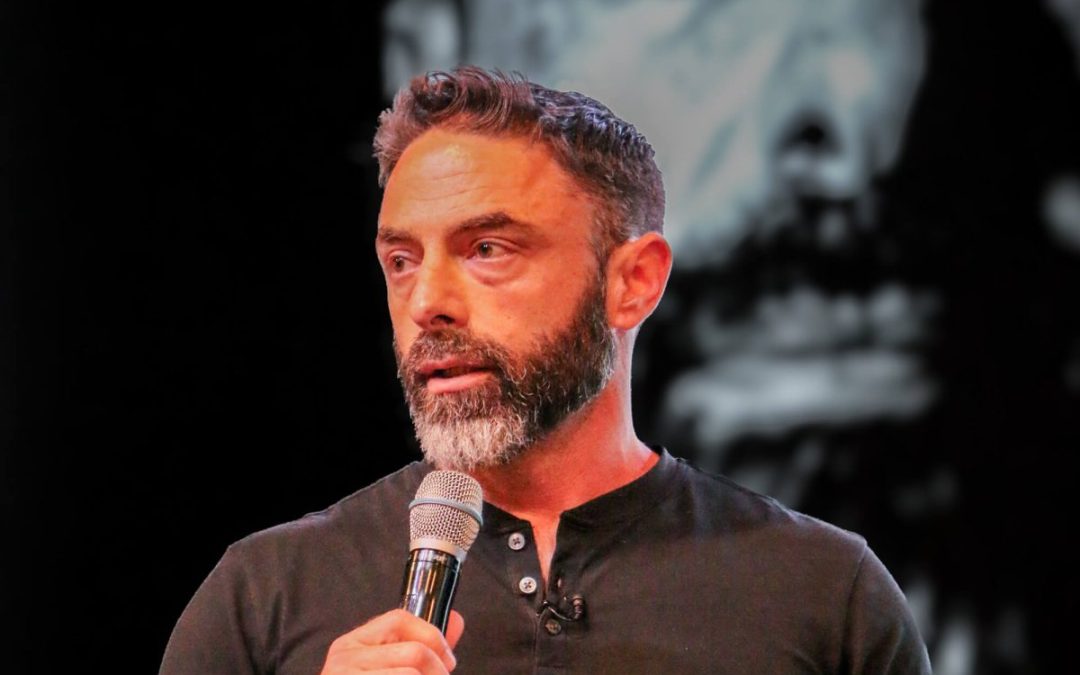
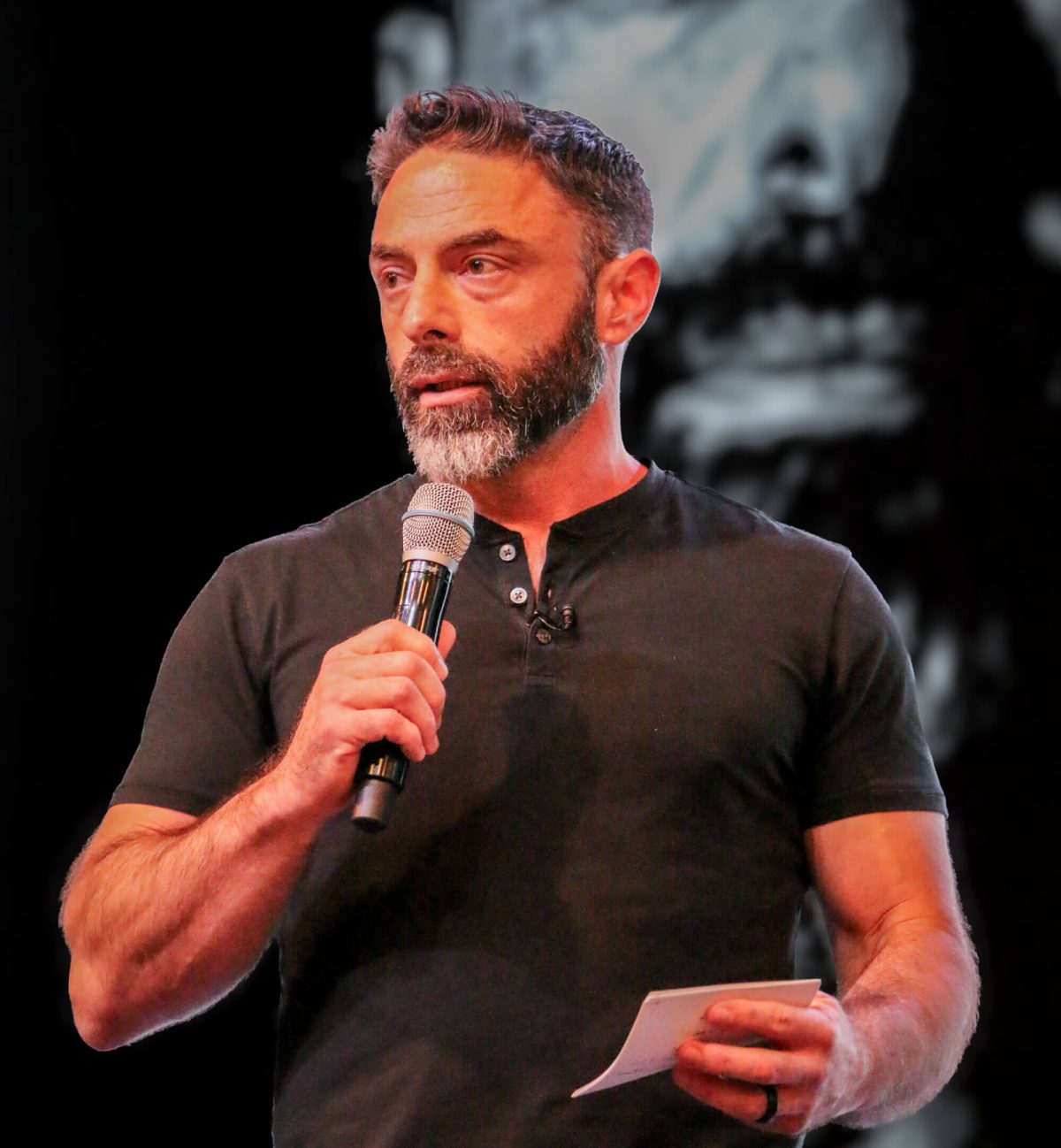
For National Muscle Health Month, the Acid Maltase Deficiency Association spoke with Brandon Mancine, Marine veteran, longtime fitness coach, and founder of BMF Coaching, about finding strength within changing physical abilities. Drawing on 25 years of coaching experience and his own recovery from a life-altering injury, Brandon shares a practical perspective on movement, meaningful progress, and making the most of what our bodies can do.
You’ve spent much of your adult life helping people become stronger. What originally attracted you to fitness, and how has your understanding of strength changed throughout your career?
I’ve been involved in athletics and physical training most of my life. I was a Marine, competed as an amateur boxer, and started my career as a personal trainer in 2001. Physical fitness has always been a big part of who I am.
When I first started coaching, I was probably like a lot of trainers. I loved helping people get stronger, build muscle, lose body fat, and accomplish things they never thought they could do. I still love all of that, but after 25 years of coaching, my understanding of what we’re really trying to accomplish has changed quite a bit.
In November of 2017, I was severely injured when a drunk driver pinned me against my vehicle. I suffered a crush injury to my right leg, compartment syndrome, and significant damage to my knee. I spent a week in intensive care, followed by a lengthy recovery. That experience changed my perspective on physical fitness. When you’ve spent your life being physically capable, it’s easy to take those abilities for granted until something happens that threatens them.
These days, what I enjoy most about coaching is helping someone improve their quality of life. Maybe that means getting stronger, but it could also mean being able to play with their grandchildren, move around their home more comfortably, or simply feel more confident in their body.
I tell people all the time that the goal isn’t to get better at exercising. The goal is to use exercise to make your life better.
For someone living with Pompe diseaseA rare genetic disease in which the body cannot properly break down glycogen, leading to buildup that damages muscles and can affect breathing and, in some cases, the heart., traditional images of fitness, like heavy weights, demanding workouts, or athletic achievements, may feel disconnected from their daily reality. How would you encourage them to think about muscle health?
I think one of the biggest mistakes we’ve made in the fitness industry is allowing people to believe that fitness has to look a certain way. We see somebody lifing hundreds of pounds, running marathons, or performing incredible physical feats, and we associate those things with being fit. There’s nothing wrong with pursuing those accomplishments, but they’re not the only measures of physical fitness.
I prefer to look at fitness in terms of what your body allows you to do in your everyday life. For one person, that might mean being able to run a few miles. For someone else, it might mean being able to transfer from their wheelchair, sit comfortably for longer periods, or participate in activities with their family.
When someone is living with a muscle condition like Pompe, their physical abilities and limitations are going to be different from those of someone without that condition. Their definition of fitness needs to reflect that reality.
The question I would encourage people to ask isn’t, “How do I compare to everybody else?” It’s, “What can I do to make the most of the abilities I have?” If we’re using appropriate exercise to support someone’s ability to participate in their own life, I consider that a worthwhile pursuit.
Many people with Pompe understandably worry that exercise could cause additional muscle damage or leave them weaker than before. How should they balance the potential benefits of movement with those concerns?
I think that’s a very reasonable concern, and it’s something that needs to be taken seriously. When I’m working with someone who has an injury or medical condition, my first priority is understanding what we’re working with. What are their limitations? What activities are appropriate? What are we trying to accomplish, and what do we need to avoid?
With Pompe disease, those questions become especially important because muscles themselves are affected by the condition. Excessive exertion can present risks that we wouldn’t necessarily encounter with an otherwise healthy individual.
One of the things I emphasize with my coaching is that more isn’t always better. There are times when increasing the challenge makes sense, but there are also times when maintaining what you’re already capable of is the appropriate goal.
I don’t believe somebody needs to finish a workout completely exhausted to get something out of it. In fact, I generally prefer that people finish their training feeling like they could have done a little more. The purpose of exercise is to help you, not leave you less capable of living your life.
Pompe affects people differently, and some readers may have limited mobility or use a wheelchair. What are a few simple movements someone could discuss with their physical therapist and potentially incorporate into a home routine?
One of the first things I learned as a coach is that an exercise is simply a tool. We should be willing to change the tool or how we use it to accommodate the person, rather than expecting the person to accommodate the exercise.
I really like exercises that have a direct connection to movements we use in everyday life. One example is a heel raise. Someone with adequate strength and balance might perform it while holding onto a sturdy countertop for support. A person who can’t safely stand might perform the movement while seated, raising and lowering their heels with their feet on the floor.
Another example is a wall push-up. For someone who can safely perform it, standing close to a wall and bending the elbows slightly allows them to practice a pushing movement without supporting as much body weight as they would during a traditional push-up. For someone with more significant weakness, a therapist might recommend a supported arm movement instead.
For those who can safely stand, practicing a supported sit-to-stand movement may also be useful. Getting up from a chair is something most people do repeatedly throughout the day, so maintaining that ability can have real practical value.
Of course, none of these exercises should be considered universally appropriate for everyone with Pompe. I’d want each person to review the movement and any modifications with their physical therapist before attempting it.
I want people to understand that modifying an exercise doesn’t make it less legitimate. The modification is what makes the movement appropriate for the individual.
For people whose abilities have changed over time, progress can be especially complicated. How can they set meaningful goals without constantly comparing themselves to what they used to be able to do?
I think this can be one of the toughest parts of dealing with physical limitations, because it’s not just about what your body can or can’t do. It can also affect how you see yourself.
I experienced some of that during my recover from the accident. I had spent most of my adult life being physically strong and capable, so suddenly having limitations that prevented me from doing things I’d previously taken for granted was frustrating.
Now, I’m not comparing my experience to living with a progressive condition like Pompe disease. Those are very different circumstances, and I recognize that someone with Pompe may be dealing with changes that exercise and rehabilitation can’t reverse. But I do understand how easy it is to become focused on what you’ve lost rather than recognizing what you’re still capable of doing.
One of the things I teach my clients is to establish goals based on where they are today and where they realistically want to go, rather than constantly comparing themselves to a previous version of themselves.
I also think it’s worth remembering that physical abilities don’t determine someone’s value as a person. That’s true whether you’re an elite athlete or someone living with a significant disability. Your physical capabilities may change, but that doesn’t diminish who you are or what you bring to the people around you.
As we recognize National Muscle Health Month, we’d like to leave our readers with something practical. What’s one small step they could take this week toward better muscle health?
I’d challenge everyone reading this to identify one physical ability that would make a meaningful difference in their daily life. It doesn’t have to be something dramatic. Maybe you’d like to maintain a particular movement, improve your comfort while performing a daily task, or simply find an appropriate way to incorporate a little more activity into your routine.
Once you’ve identified that goal, talk with your health care team about one exercise or activity that might help support it. If you already have an approved physical therapy program, choose one appropriate movement and make a commitment to practice it consistently within the limits your therapist established.
One of the principles I teach in my coaching is that when the goal feels far away, you need to focus on the next play. In other words, don’t become so overwhelmed by the distance between where you are and where you’d like to be that you overlook what you can do today.
Living with Pompe presents challenges that most people will never fully understand, and I don’t want to minimize those challenges. But I hope everyone reading this recognizes that strength isn’t limited to how much weight you can lift or how far you can walk.
Find the movement that is appropriate for you, make it part of your life, and give yourself credit for the effort. That’s a meaningful place to begin.