

AMDA Continuing Medical Education –
CME Partnerships
The AMDA partners with organizations to promote CME programs that provide healthcare professionals with up-to-date education on Pompe diseaseA rare genetic disease in which the body cannot properly break down glycogen, leading to buildup that damages muscles and can affect breathing and, in some cases, the heart.. By highlighting the latest research, treatment strategiesA planned approach to managing disease that may include medicines, monitoring, supportive care, and other therapies., and best practices, we support physicians and care teams in delivering evidence-based care and improving patient outcomes.
Patient-centered Care to Maximize Long-term Respiratory and Motor Function and Quality of Life in Late-onset Pompe Disease
In Partnership With:

Program Expiration: September 11, 2026
Why Attend?
Late-onset Pompe disease (LOPD)A form of Pompe disease that begins after infancy and usually progresses more slowly. subtle symptoms can delay diagnosis and treatment, impacting outcomes. Hear from experts, a nurse practitionser, and a patient as they share the latest therapies, practical daignostic tips, and team-based strategies for earlier intervention and better patient care.
Learning Objectives:
- Spot LOPD using the latest diagnostic tools
- Compare available therapies and their long-term effects
- Apply recent safety, efficacy, and patient-reported data to care decisions
- Build personalized treatment plans with a team-based approach
- Tahseen Mozaffar, MD, FAAN
Professor of Neurology
Univeristy of California, Irvine - Benedikt Schoser, MD
Professor of Neurology
Friedrich-Baur-Institute Dep. of Neurology
LMU Clinic Munich Germany - Natalie Goedeker, DNP, CPNP
Co-director, pediartic neuromuscular clinical research
Washington Univeristy in St. Louis School of Medicine - Dwayne M. Wilson
Pompe Patient
Program Information
Program Description
Late-onset Pompe disease (LOPD) can present subtly and progress slowly, making early diagnosis a clinical challenge. Misdiagnosis can lead to delayed treatment initiation and increased morbidity and mortality. While newer therapies such as enzyme replacement therapy (ERT)A treatment that replaces the missing enzyme through IV infusion. have expanded the treatment landscape and improved the natural course of LOPD and patient quality of life, early initiation of treatment when clinical or imaging signs first appear is key to optimizing outcomes.
Join us for this program, in which a panel of neurology experts and a nurse practitioner will review emerging therapeutic options and share practical approaches to timely diagnosis and treatment initiation. Through a multidisciplinary lens, the discussion will explore team-based strategies and shared decision-making that support patient-centered care. A compelling pre-recorded patient vignette will highlight the lived experience of LOPD, helping to connect clinical decision-making with real-world impact.
Learning Objectives
- Identify patients with late-onset Pompe disease (LOPD) using the latest diagnostic criteria and tools, such as GAA enzyme-activity testing and genetic analysis
- Review the differences in the mechanisms of action and long-term impacts on motor and respiratory function of available therapies for LOPD
- Summarize the practical implications of the latests safety and efficacy findings of newly approved therapies for LOPD, including recent trial results and patient-reported outcomesInformation about health, symptoms, or quality of life reported directly by patients.
- Discuss individualized treatment plans that incorporate multidisciplinary careCare provided by a team of health professionals from different specialties working together. collaboration and shared decision-making for patients with LOPD
Topics of Interest
- When to suspect LOPD
- Clinical clues, biomarkersA measurable sign in the body that helps track disease progression or treatment response., and genetic testingA test that looks for changes in a person's genes, including changes in the GAA gene.
- Epidemiology, genetic underpinnings, burden of disease
- From mechanism to patient outcomes: Navigating the expanding landscape of LOPD therapies
- Overview of current treatment options
- Emerging therapeutic options
- Where newer therapies fit in the treatment algorithm
- Personalizing team-based care and treatment through shared decision-making
- Coordinating care within the multidisciplinary team
- Practical considerations of integrating newer therapies into LOPD care
Release/Expiration Date
Release Date: September 11, 2025- enduring only
Expiration Date: September 11, 2026
Target Audience
The educational design of this activity addresses the needs of neurologists, neuro-muscular HCPs (MDs, DOs, NPs, PAs, nurses), pediatric neurologists, pediatricians, orthopedists, physical therapists, respiratory specialists, and other HCPs involved in the care of Pompe disease.
Faculty Biographies

Tahseen Mozaffar, MD, FAAN
Professor of Neurology
University of California, Irvine
Tahseen Mozaffar, MD, FAAN is a professor of neurology and pathology and laboratory medicine and the director of the Division of Neuromuscular Disorders at the University of California, Irvine (UCI). He is the associate director for the Center for Translational Sciences Award (CTSA) at UCI, and is the Principal Investigator for UCI-NEXT, a NeuroNEXT award funded by NINDS/NIH. He is actively involved in clinical and translational research in neuromuscular disorders, including currently serving as Principal Site Investigator on over a dozen clinical trialsA research study that tests new treatments or approaches in people. in myasthenia gravis, rare and ultra-rare myopathies, and in immune myopathies. He has co-authored over 190 peer-reviewed publications and has authored or co-authored over a dozen book chapters and invited reviews.

Benedikt Schoser, MD
Professor of Neurology
Friedrich-Baur-Institute Dep. of Neurology
LMU Clinic Munich Germany
Benedikt Schoser, MD is a neurologist, neurophysiologist, neurointensivist, palliative medicine doctor, and muscle pathologist. He is a professor of neurology and a senior consultant neurologist at the Friedrich-Baur-Insititute’s Department of Neurology at the Ludwig-Maximilians-University in Munich, Germany. His research interests are in multisystemic neuromuscular disorders, translational research, and therapy. He is the executive section editor of Neuromuscular Disorders and a member of the editorial board of Current Opinions in Neurology and the European Journal of Neurology. He has authored more than 380 peer-reviewed publications in clinical and translational science.
Natalie Goedeker, DNP, CPNP
Co-director, pediatric neuromuscular clinical research
Washington University in St. Louis School of Medicine
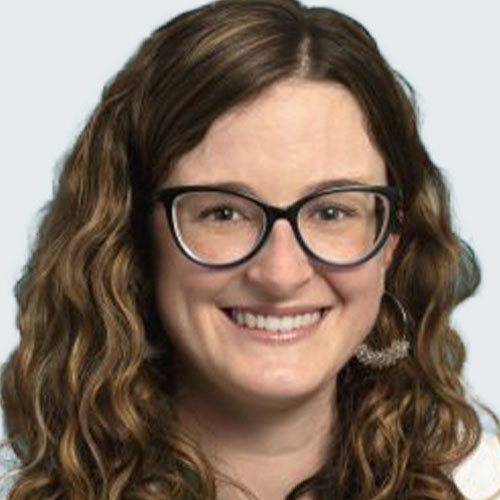
Natalie Goedeker, DNP, CPNP is a pediatric nurse practitioner in the department of neurology, neuromuscular division, at Washington University School of Medicine in St. Louis. She is the co-director of the Pediatric Neuromuscular Clinical Trials Team. She has over 10 years of experience caring for pediatric patients, most of which has been spent caring for children with neurological and neuromuscular diseases. She has investigator experience in over 30 clinical trials for pediatric neuromuscular diseases and helps coordinate care for patients receiving gene transfer therapy, enzymeA protein that helps the body carry out chemical reactions. replacement therapies, and other complex therapeutics in the neuromuscular space.

Dwayne M. Wilson
Pompe Patient
Dwayne M. Wilson was diagnosed with Late Onset Pompe Disease (LOPD) in 2018 after years of unexplained symptoms. He lives in Irvine, California, with his wife and mother-in-law and is a devoted father and grandfather. Since starting treatment, Dwayne has embraced advocacy, becoming a patient speaker, MDA Ambassador, and former columnist for Pompe Disease News. He shares his story to raise awareness and spread hope—living by the motto: “Pompe, it’s in my DNA. I have Pompe, Pompe doesn’t have me.”
This activity is jointly provided by Global Education Group and MedliveCME, LLC (previously known as PlatformQ Health Education, LLC), in collaboration with National Organization for Rare Disorders (NORD) and Acid Maltase Deficiency Association (AMDA)
This activity is supported by an independent medical education grant from Amicus Therapeutics US, LLC
Acid Maltase Deficiency Association
For the AMDA videos: All Rights reserved. No part of the AMDA’s videos may be reproduced or transmitted in any form or by any means, electronic or mechanical, without the written permission of the copyright holder.
If you are interested in learning more about Pompe Disease and would like to make a contribution in support of necessary research, please contact us at:

info@amda-pompe.org
THE AMDA
PO Box 700248
San Antonio, Texas 78270 USA