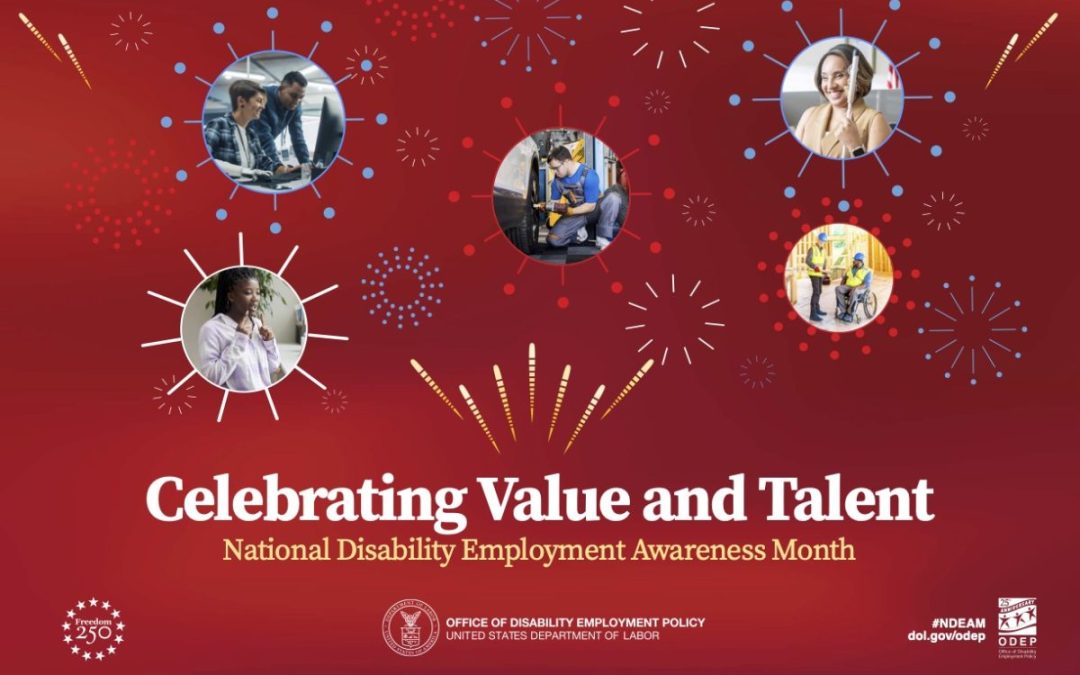
October — a month that many associate with Halloween, and those in the Northern Hemisphere associate with fall — holds a special cause for celebration in our community. October is National Disability Employment Awareness Month (NDEAM). Starting in 1945, NDEAM began as a one-week observance for workers with physical disabilities. By 1962, the observance was expanded to include workers with mental disabilities. It wasn’t until 1988 that the U.S. Congress voted to dedicate the observance to the entire month.
According to findings reported by the U.S. Department of Labor in August, the unemployment rate for folks with disabilities is 8.3%, while the unemployment rate for folks without a disability is 4.2%. This figure helps illustrate a very real barrier that a disability can cause in the workplace. It is with this hurdle in mind that NDEAM becomes more poignant. But just because there is a hurdle associated with disability in the workforce does not mean there aren’t any options available.
The state programs may vary, but a common throughline is Vocational Rehabilitation (VR) programs funded by the U.S. Department of Education. These VR programs can offer assistance with education, assistive technology necessary to complete the job requirements, transportation, and more. For many people with disabilities, hefty expenses are not uncommon. These funding programs can be extremely beneficial for those looking to join the workforce. But having a job is just one piece of the puzzle.
Once employed, people with disabilities have to concern themselves with income in relation to their benefits. If they earn too much, it could impact the services they receive from Medicaid — services they rely on to lead a healthy life. Federal programs like Ticket to Work and ABLE accounts help address this problem.
The Ticket to Work program is a Social Security incentive program that is free and voluntary. It helps people with disabilities transition to the workforce to achieve financial independence. But once someone finds a job and paychecks start going into the bank, another problem arises. Many people on Medicaid and Social Security programs like Supplemental Security Income (SSI) have an asset limit, or a limit on the total amount of countable resources they can have in their name. This limit is often negligible when it comes to having enough to live on. Any amount that exceeds that limit can affect a person’s eligibility to remain on Medicaid and SSI. That’s where ABLE accounts come in.
With an ABLE account, people are allowed to save a certain amount of money without affecting their Medicaid and SSI eligibility. For SSI recipients, up to $100,000 in the account is generally excluded from the program’s resource limit. As long as withdrawals from this account are made to purchase a Qualified Disability Expense (QDE), the account owner will not face federal tax penalties. The overall ABLE account limit varies by state, so if you are looking into getting one of these, or looking into having someone you know with a disability get one, please make sure you know your state’s guidelines.
The minutiae involved with each person applying to the above programs vary — it is definitely not a one-size-fits-all. While resources are available, the process to access them can be confusing; it’s in this way that people with disabilities face another hurdle. Nevertheless, the information is out there! If you feel confused by any of it, that is entirely normal. Talk to your local Social Security office to get the ball rolling if you think any of these programs may benefit you.
Working can make you feel productive, and for someone with a disability, it can serve as a way to feel included in a society that can sometimes feel like it’s trying to exclude them. To see a list of resources that pertain to working with a disability, please click here. It’s in this way that we focus our observance of NDEAM. Have a productive month!
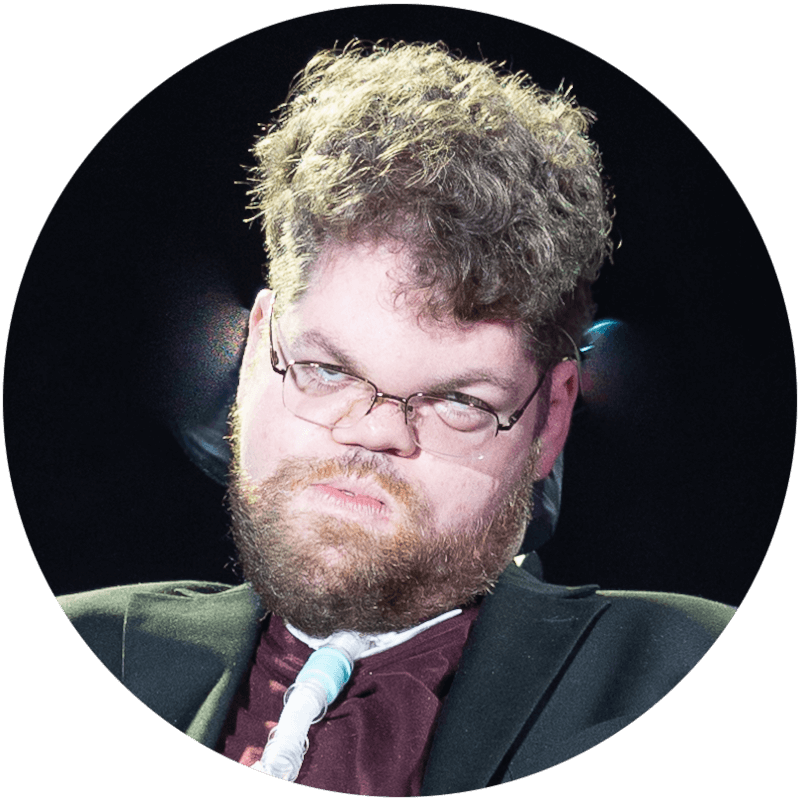
Lucas Garrett
Editor and Community Contributor
Lucas Garrett is an active performing musician, composer, and arranger in upstate New York. In addition to his work in the arts, he serves as a freelance journalist for a local newspaper, covering arts and culture.
Garrett has been living with Pompe diseaseA rare genetic disease in which the body cannot properly break down glycogen, leading to buildup that damages muscles and can affect breathing and, in some cases, the heart. for over three decades and continues to lead a full and creative life. Prior to joining the AMDA staff, he collaborated with Marsha Zimmerman and Tiffany House on several projects, including working on the AMDA’s Mentoring Program, compiling research articles into the organization’s database, and conceptualizing early AMDA webinar programming.
Lucas is currently enrolled in UC San Diego’s certificate program in copyediting. He holds a bachelor’s degree in applied mathematics from SUNY Empire State (2017) and an associate degree in general science from SUNY Adirondack (2013).