
Move How You Can, Rest All You Need
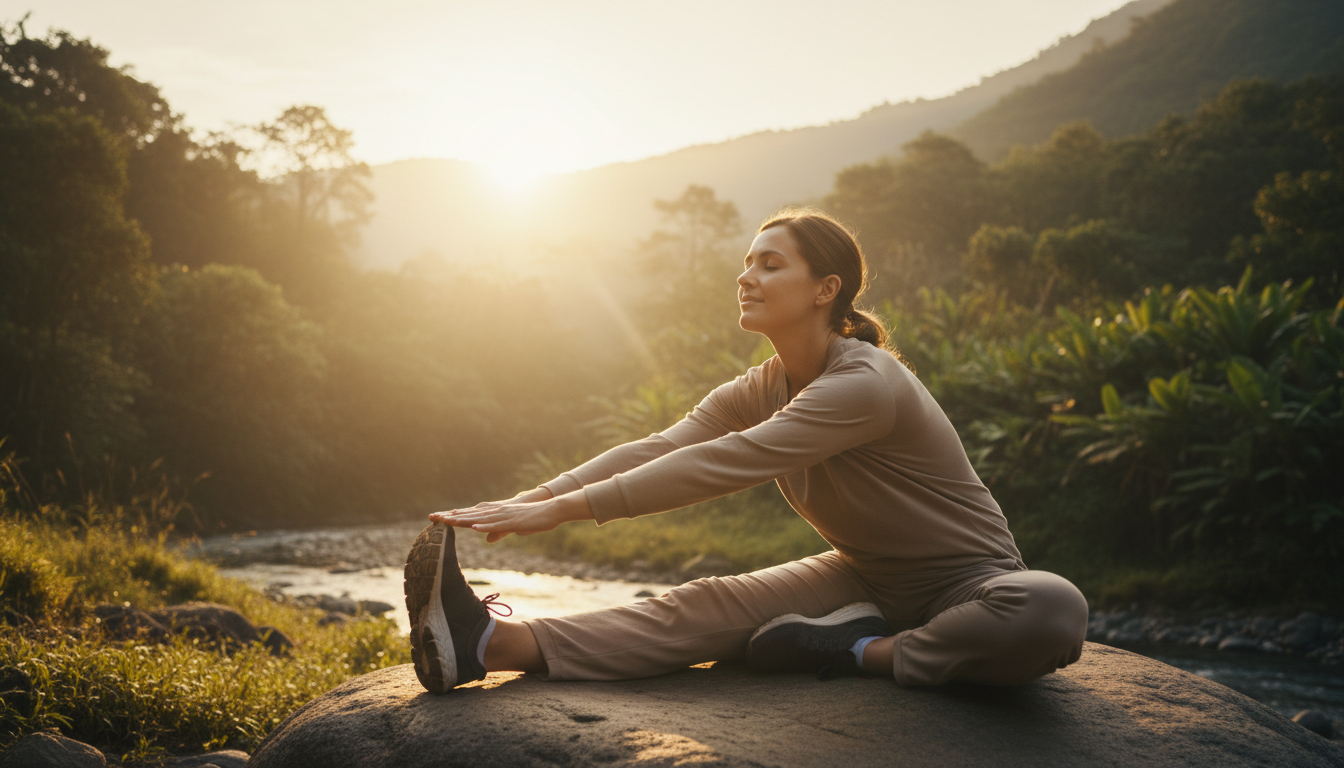
Hey, all! Lucas Garrett, here. As we head into April, I wanted to take a minute to jot down a few ideas on staying healthy — physically and mentally. As many in the Pompe community may already be keenly aware, well-regulated habits of getting quality sleep, eating well, and exercising consistently (however we are able) are three holistic ways to lead as healthy a life as possible. What’s more, the healthier we are physically, especially through exercising, the better prepared we are to deal with acute stress. This article will focus on sleep and exercise, while briefly tying in stress management. Fittingly, this article falls in a month where not only are we observing Stress Awareness Month, but also National Exercise Day (April 18).
For those that are currently acing all of these habits — that’s great! For those that aren’t acing these goals, that’s OK, too! Remember, just like I wrote in January’s article, it is OK to fall off the wagon with goals or resolutions, the more important part is that we try new things and extend grace to ourselves as we would extend it to others.
A press release from the American Academy of Sleep Medicine (AASM) and Sleep Research Society (SRS) highlighted findings from 15 sleep study experts showing that adults between the ages of 18 and 65 should aim for at least 7 hours of sleep every night. Furthermore, the organizations stated that while there is a minimum, there is no maximum (American Academy of Sleep Medicine, 2015). In other words, there’s no such thing as too much sleep! But what does sleep look like for someone with a rare condition like Pompe disease?
Personally speaking, my hours of sleep are interrupted by routine treatments — treatments that keep my airway healthy. As such, I may rest for about 8.5 hours, but in actuality this results in 6 to 6.5 hours of sleep. Sometimes, I will get less than 6 hours. I used to get much less sleep than that, but I’ve really been diligent in keeping a strict(er) nighttime schedule: I get in bed the same time every night, have the same wind-down routine, and force myself to eventually roll over and close my eyes. If I were to consistently get over 7 hours of sleep, I’d need to be in bed for well over 9 hours. Since I work two or more jobs, and exercise every day, lying in bed for that long is just not feasible. All in all, I’ve increased my average sleep cycle by about 1.5 hours, and my body thanks me for it.
As I mentioned, exercise is such an ingrained part of my day. Whether I’m focusing on muscles in my upper arms, core, lower legs, oral motor, hands, or a combination of all of the above, I strive to exercise for at least one hour per day. But exercises don’t come in the form of a Planet Fitness membership — many folks in the Pompe community know this all too well. That being said, here are some things I do
- Pulley exercises (upper arms),
- Auto elliptical on manual and auto settings (lower legs),
- Head and neck exercises (core),
- Speech and diction exercises (oral motor), and
- Digging through sand (hands).
- This can be done without sand — simply mimic the movement by making a digging motion on a flat surface like a table.
I won’t dare speak for anyone else in the Pompe community, but personally, my life comes with a lot of stress. I’ve found exercising to be a great outlet for it. Research from Emma Childs and Harriet de Wit (2014) supports this. In it, their findings show that “regular exercisers may be more resistant to acute stress, which may protect them against future poor health” (Childs and de Wit). An article from Mayo Clinic reinforces this assertion. Exercising boosts your level of endorphins — the brain’s feel-good neurotransmitters — and acts as a form of moving meditation (Mayo Clinic, 2025). If I go a day or so without doing these, I definitely find myself missing it.
Remember, everything in life is best in moderation and balance! It is important to rest, and it is just as important to move! Do you find yourself getting good sleep? What are some exercises you routinely do? Let us know!
References
American Academy of Sleep Medicine. (2015, June 1). Seven or more hours of sleep per night: A health necessity for adults [Press release]. https://aasm.org/seven-or-more-hours-of-sleep-per-night-a-health-necessity-for-adults/
Childs E, de Wit H. Regular exercise is associated with emotional resilience to acute stress in healthy adults. Front Physiol. 2014 May 1;5:161. doi: 10.3389/fphys.2014.00161. PMID: 24822048; PMCID: PMC4013452.
Mayo Clinic. (2025, September 19). Exercise and stress: Get moving to manage stress. https://www.mayoclinic.org/healthy-lifestyle/stress-management/in-depth/exercise-and-stress/art-20044469
Lucas Garrett
Editor and Community Contributor
Lucas Garrett is an active performing musician, composer, and arranger in upstate New York. In addition to his work in the arts, he serves as a freelance journalist for a local newspaper, covering arts and culture.
Garrett has been living with Pompe disease for over three decades and continues to lead a full and creative life. Prior to joining the AMDA staff, he collaborated with Marsha Zimmerman and Tiffany House on several projects, including working on the AMDA’s Mentoring Program, compiling research articles into the organization’s database, and conceptualizing early AMDA webinar programming.
Lucas is currently enrolled in UC San Diego’s certificate program in copyediting. He holds a bachelor’s degree in applied mathematics from SUNY Empire State (2017) and an associate degree in general science from SUNY Adirondack (2013).