New Year’s Resolutions and Hobbies
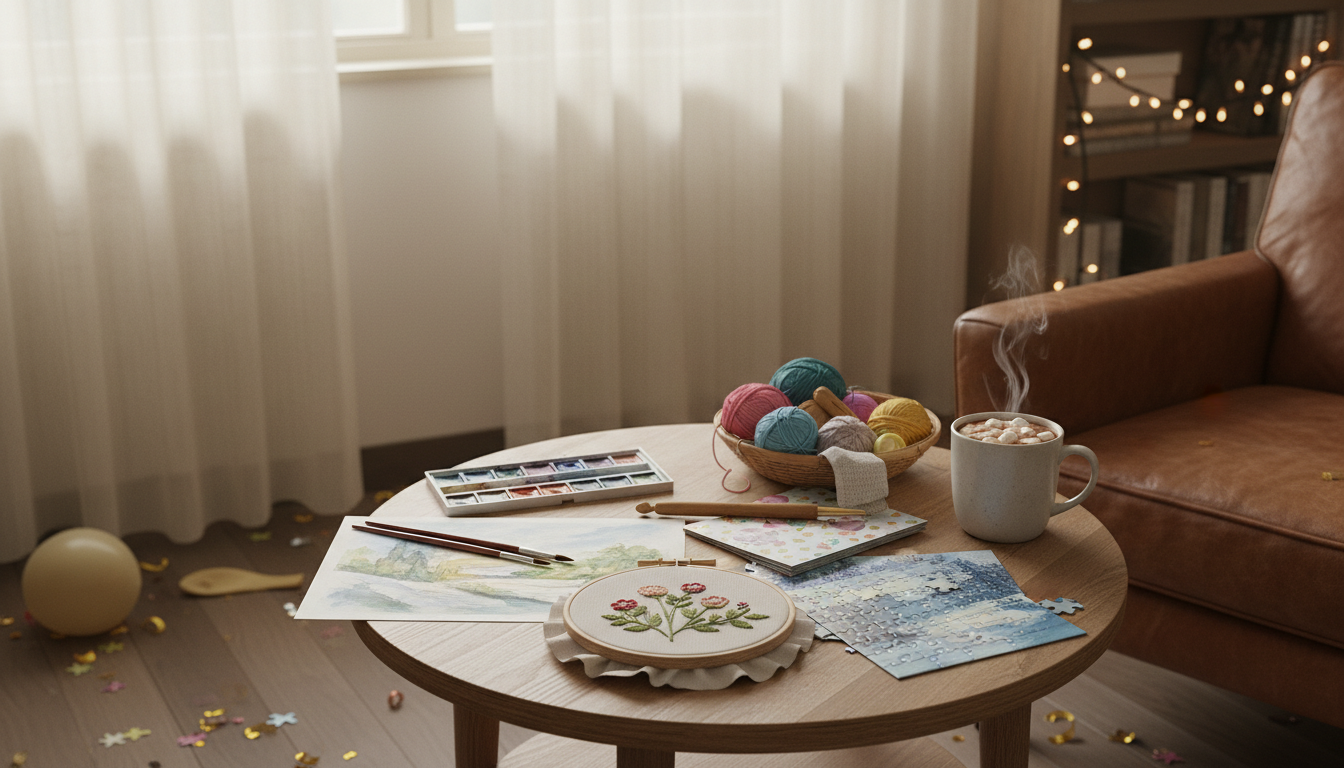
For many, the end of the calendar year is often packed to the brim with holiday cheer, friends, and family, and there’s a sense of societal pressure that comes with the fanfare. As we stroll past the malaise that can come from self-indulgent overeating and partying with friends and family over the holidays, we’re immediately smacked in the face with New Year’s Eve. Then comes the overabundant pressure that can occur from the New Year’s resolutions that we drum up and feel the need to share with our loved ones.
How many times have you made a resolution, only to break it by the end of the week? End of the month? Heck, maybe you’re on a good clip this year and make it all the way to April before the resolution breaks. But when it does break, we feel so guilty about it. Why? Why do we, as humans, tend to put so much pressure on ourselves to change, while extending grace to others that don’t? We should extend the grace we give others to ourselves. Recently, I’ve worked hard on fixing the conundrum I’ve faced around the dreaded New Year’s resolution, and a big part of the work was following the advice a friend of mine, Jeff Brisbin, sang in his song, “New Year’s Day.”
In it, Brisbin pleads “You don’t need a December evening / Times Square or Auld Lang Syne / All you need is to believe that / It’s New Year’s Day all the time.” The words struck me the first time I heard them, and they continue to resonate with me today.
Rather than resort to resolution (that alliteration was unintentional, but it made me chuckle!), I have been trying to pivot toward acquiring new hobbies in the new year. That way, if the hobby isn’t enjoyable, I don’t feel guilty about stopping it, and if it is enjoyable, then I have a new way to add fulfillment to my life.
When it comes to many things in my life, I tend to err on the side of hyperfixation. All too apparent in my past resolution attempts, this proclivity of mine to hyperfixate has a much healthier existence in hobbies. It’s perfectly fine, and much healthier in my opinion, to obsess about a new hobby or entertainment source.
My newest obsession is the New York Times games. I was suckered into a dollar a week subscription, and having some money leftover at the end of the year, I found a way to get rid of it! (Who says email advertisements don’t work?!) Now, my nighttime routine is to whip through the various games, tackling the crossword last. Before this hobby, I ran through many origami designs, folding and folding ad nauseum until the mental itch slowly abated. Before that, chess. Other hobbies of mine that I am continually fond of are playing video games and watching the latest show that is all the rage in my family and friends’ circles.
There seems to be quite the argument for hobbies helping your health, as well. A study published by Nature Medicine in 2023 has findings that greatly support the idea that having hobbies can be a great way to promote healthy aging. The correlative study didn’t definitively prove the concept, but it showed far and away that those that engaged in hobbies are involving their brains in activities that help to promote mental health and well-being. (You can read the study here.)
To me, that sounds a lot nicer than subjecting yourself to disparaging thoughts once the resolution or resolutions you claimed to make ultimately — and extremely understandably — snap in half! So, what hobbies do you think you might like to try? I’d love to hear some suggestions!
References
Mak, H.W., Noguchi, T., Bone, J.K. et al. Hobby engagement and mental wellbeing among
people aged 65 years and older in 16 countries. Nat Med 29, 2233–2240 (2023).
Lucas Garrett
Editor and Community Contributor
Lucas Garrett is an active performing musician, composer, and arranger in upstate New York. In addition to his work in the arts, he serves as a freelance journalist for a local newspaper, covering arts and culture.
Garrett has been living with Pompe diseaseA rare genetic disease in which the body cannot properly break down glycogen, leading to buildup that damages muscles and can affect breathing and, in some cases, the heart. for over three decades and continues to lead a full and creative life. Prior to joining the AMDA staff, he collaborated with Marsha Zimmerman and Tiffany House on several projects, including working on the AMDA’s Mentoring Program, compiling research articles into the organization’s database, and conceptualizing early AMDA webinar programming.
Lucas is currently enrolled in UC San Diego’s certificate program in copyediting. He holds a bachelor’s degree in applied mathematics from SUNY Empire State (2017) and an associate degree in general science from SUNY Adirondack (2013).