
2013 Helen Walker Research Grant Award
University of Florida| Barbara K. Smith, PhD, PTSupporting research aimed at improving breathing function and quality of life in Pompe diseaseA rare genetic disease in which the body cannot properly break down glycogen, leading to buildup that damages muscles and can affect breathing and, in some cases, the heart..
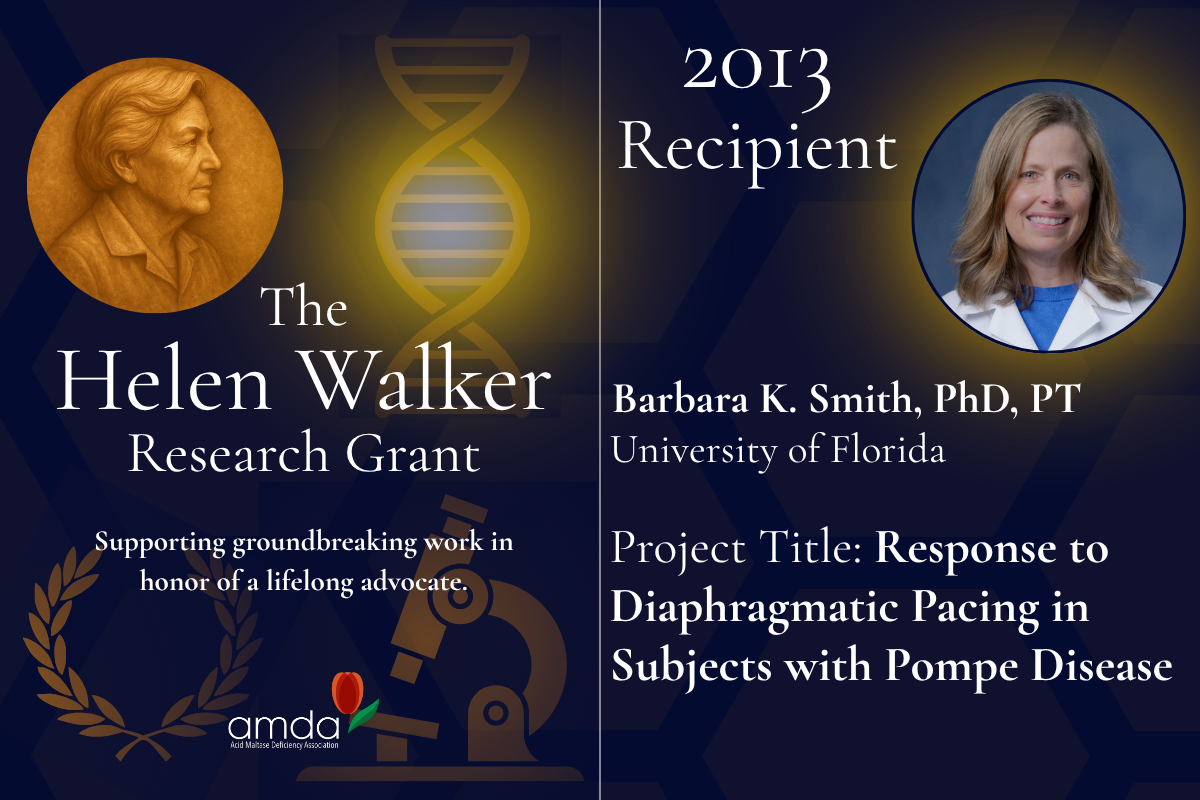
Quick Facts
Year Awarded:
2013
Funding Amount:
$120,000
Lead Investigator:
Barbara K. Smith, PhD, PT
Institution:
University of Florida
Research Focus:
Respiratory care and quality of life
Status:
Completed
Project Title
Response to Diaphragmatic Pacing in Subjects with Pome Disease
Project Snapshot
In 2013, the AMDA awarded the Helen Walker Research Grant to Barbara K. Smith, PhD, PT, at the University of Florida, to study the potential benefits of diaphragmThe main muscle used for breathing. pacing for individuals with Pompe disease who rely on mechanical ventilationA method of assisting or replacing breathing using a machine that moves air in and out of the lungs..
Respiratory muscle weaknessA loss of strength that can affect movement, posture, and sometimes breathing. — particularly weakness of the diaphragm — is a major complication of Pompe disease. Although enzymeA protein that helps the body carry out chemical reactions. replacement therapy improves many aspects of the disease, many patients continue to develop respiratory insufficiencyA condition in which the breathing muscles are too weak to support normal breathing needs. and require increasing ventilator support. Ventilator dependence can significantly affect quality of life and increase the risk of additional medical complications.
This project investigated whether diaphragm pacing, a technique that electrically stimulates the diaphragm through implanted electrodes, could help patients regain greater independence from mechanical ventilation. The research evaluated respiratory function and patient-reported quality of life following six months of diaphragm conditioning and pacing therapy in adults with Pompe disease.
Research Objectives
The project aimed to address several key questions related to treatment outcomes in Pompe disease:
1. Quantify the impact of diaphragm pacing on ventilator dependence
Researchers evaluated whether stimulation of the phrenic motor system through intramuscular diaphragm pacing could reduce reliance on positive pressure mechanical ventilation in adults with severe respiratory insufficiency caused by Pompe disease. The study measured respiratory muscle performance and the ability to tolerate breathing without ventilator support following six months of diaphragm conditioning.
2. Evaluate changes in quality of life following diaphragm pacing rehabilitation
The study assessed whether diaphragm pacing and progressive ventilator weaning improved patient-reported outcomesInformation about health, symptoms, or quality of life reported directly by patients. related to physical function, fatigueA strong sense of tiredness or low energy that does not fully improve with rest., sleep, and social participation. Standardized quality of life measures were used to assess whether improvements in breathing independence translated into meaningful improvements in daily life.
Why This Matters
Respiratory failure remains one of the most serious complications of Pompe disease. Many patients eventually require long-term ventilatory support due to progressive diaphragm weakness. While mechanical ventilation helps maintain breathing, it can significantly limit independence and quality of life.
Diaphragm pacing offers a potential alternative by stimulating the diaphragm muscle directly, enabling more natural breathing patterns and potentially reducing reliance on mechanical ventilation. This research aimed to provide important clinical data on whether diaphragm pacing could serve as an effective rehabilitation strategy for improving breathing function and overall quality of life in individuals living with Pompe disease.
Research Team
Institution
University of Florida, United States

Lead Investigator
Barbara K. Smith, PhD, PT
Department of Physical Therapy, University of Florida
Co-Investigators
Barry Byrne, MD, PhD
Tina Cousins, RT
Consultant
Teresa Sexton, ARNP
Lead Investigator
Barbara K. Smith, PhD, PT
Department of Physical Therapy, University of Florida
Co-Investigators
Barry Byrne, MD, PhD
Tina Cousins, RT
Consultant
Teresa Sexton, ARNP
Grant Support
The AMDA awarded $120,000 through the Helen Walker Research Grant to support this project.
Funding supported personnel effort for the research team, specialized monitoring equipment for respiratory testing, participant travel reimbursement, and medical supplies needed to support diaphragm pacing and ventilator-weaning studies.
Publications Resulting from This Research
This section will be updated as we collect more information about publications resulting from this research.
Related Outputs
This section will be updated as we collect more information about presentations, follow-up studies, or related outputs from this project.
Ongoing Impact
Research supported by the Helen Walker Research Grant helps build knowledge that can shape future studies, clinical care, and treatment strategiesA planned approach to managing disease that may include medicines, monitoring, supportive care, and other therapies. in Pompe disease. As additional publications, presentations, and follow-up work emerge, this page will continue to be updated.
About the Helen Walker Research Grant
The Helen Walker Research Grant honors Helen Walker, a dedicated patient advocateA person who helps patients and families navigate care, information, services, and support. and leader in the Pompe community. Through this grant, the AMDA supports innovative research aimed at improving understanding, treatment, and care for individuals living with Pompe disease.
Explore more Helen Walker Research Grant awardees and the growing body of Pompe research supported by the AMDA.