
2012 Helen Walker Research Grant Award
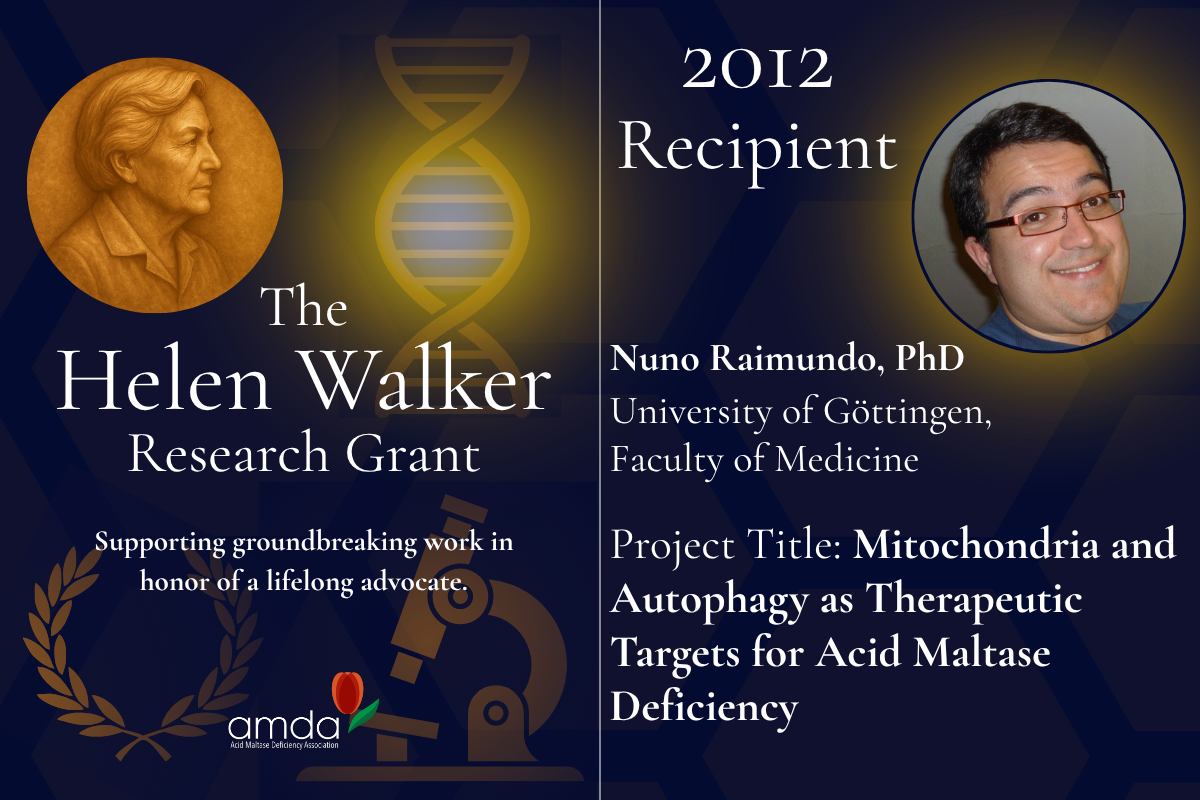
University of Göttingen | Nuno Raimundo, PhDSupporting research aimed at identifying new therapeutic targets for Pompe diseaseA rare genetic disease in which the body cannot properly break down glycogen, leading to buildup that damages muscles and can affect breathing and, in some cases, the heart..
Quick Facts
Year Awarded:
2012
Funding Amount:
$100,000
Lead Investigator:
Nuno Raimundo, PhD
Institution:
University of Göttingen, Faculty of Medicine, Department of Biochemistry, Germany
Research Focus:
Therapeutic development and disease mechanism
Status:
Completed
Project Title
Mitochondria and AutophagyThe cell's internal cleanup system that removes damaged or unneeded material. as Therapeutic Targets for Acid Maltase Deficiency
Project Snapshot
In 2012, the AMDA awarded the Helen Walker Research Grant to Nuno Raimundo, PhD, at the University of Göttingen, Faculty of Medicine, in Germany, to investigate new therapeutic strategies aimed at improving muscle function in Pompe disease. While enzymeA protein that helps the body carry out chemical reactions. replacement therapy has significantly improved patient outcomes, it primarily addresses the underlying enzyme deficiency and may not fully correct the complex cellular dysfunctionWhen cells do not function properly due to internal stress or buildup of substances such as glycogen. associated with the disease.
This project focused on understanding how mitochondrialParts of the cell that produce energy. dysfunction and impaired autophagy contribute to the muscle pathology observed in Pompe disease. The research aimed to determine whether improving mitochondrial performance and enhancing cellular recycling pathways could alleviate symptoms of acid maltase deficiency.
Using mouse modelsA laboratory mouse used to study disease and test treatments before human trials. of Pompe disease, the research examined genetic and pharmacological approaches designed to increase mitochondrial function and promote the removal of damaged cellular components. These studies were intended to identify potential therapeutic strategies that could complement existing treatments and improve muscle health in individuals living with Pompe disease.
Research Objectives
The project aimed to address several key questions related to treatment outcomes in Pompe disease:
1. Increase mitochondrial performance to improve skeletal muscle function in Pompe disease
Researchers investigated whether enhancing mitochondrial biogenesis in skeletal muscleMuscles that control movement and are commonly affected in Pompe disease. could alleviate the muscle pathology associated with Pompe disease. This approach involved crossing Pompe disease mouse models with transgenic mice engineered to increase mitochondrial content and activity.
2. Increase autophagy and lysosomal clearance in skeletal muscle
The study examined whether boosting autophagy and lysosomal biogenesis through TFEB overexpression could reduce lysosomal glycogen accumulationThe buildup of glycogen inside cells and tissues when it is not broken down properly. and improve muscle function in a Pompe disease mouse model.
3. Evaluate pharmacologic activation of mitochondrial and autophagy pathways
Researchers tested whether drugs known to stimulate mitochondrial biogenesis and autophagy — such as bezafibrate and metformin — could improve muscle performance and cellular function in Pompe disease models.
Why This Matters
Pompe disease results from the buildup of glycogenA stored form of sugar used for energy. within lysosomesA small part of the cell that acts like a recycling center, helping break down waste materials. due to a deficiency of the enzyme acid alpha-glucosidase. While enzyme replacement therapy addresses the underlying enzyme deficiency, research increasingly suggests that secondary cellular effects — such as mitochondrial dysfunction and impaired autophagy — also contribute to muscle pathology.
By exploring therapeutic strategies that target these additional cellular pathways, this research aimed to identify new approaches that could complement existing treatment and improve long-term outcomes for people living with Pompe disease.
Research Team
Institution
Department of Biochemistry, Faculty of Medicine, University of Göttingen, Germany
Lead Investigator
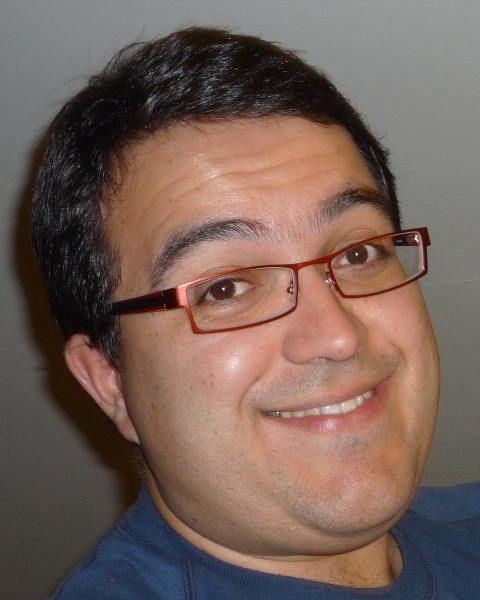
Nuno Raimundo, PhD
Department of Pathology, Yale University School of Medicine
(Group Leader at the University of Göttingen, Germany)
Lead Investigator
Nuno Raimundo, PhD
Department of Pathology, Yale University School of Medicine
(Group Leader at the University of Göttingen, Germany)
Grant Support
The AMDA awarded $100,000 through the Helen Walker Research Grant to support this project.
Funding supported the salary of a postdoctoral scientist, laboratory consumables, and the maintenance and study of mouse models used to investigate mitochondrial and autophagy pathways in Pompe disease.
Publications Resulting from This Research
This section will be updated as we collect more information about publications resulting from this research.
Related Outputs
This section will be updated as we collect more information about presentations, follow-up studies, or related outputs from this project.
Ongoing Impact
Research supported by the Helen Walker Research Grant helps build knowledge that can shape future studies, clinical care, and treatment strategiesA planned approach to managing disease that may include medicines, monitoring, supportive care, and other therapies. in Pompe disease. As additional publications, presentations, and follow-up work emerge, this page will continue to be updated.
About the Helen Walker Research Grant
The Helen Walker Research Grant honors Helen Walker, a dedicated patient advocateA person who helps patients and families navigate care, information, services, and support. and leader in the Pompe community. Through this grant, the AMDA supports innovative research aimed at improving understanding, treatment, and care for individuals living with Pompe disease.
Explore more Helen Walker Research Grant awardees and the growing body of Pompe research supported by the AMDA.