
2017 Helen Walker Research Grant Award
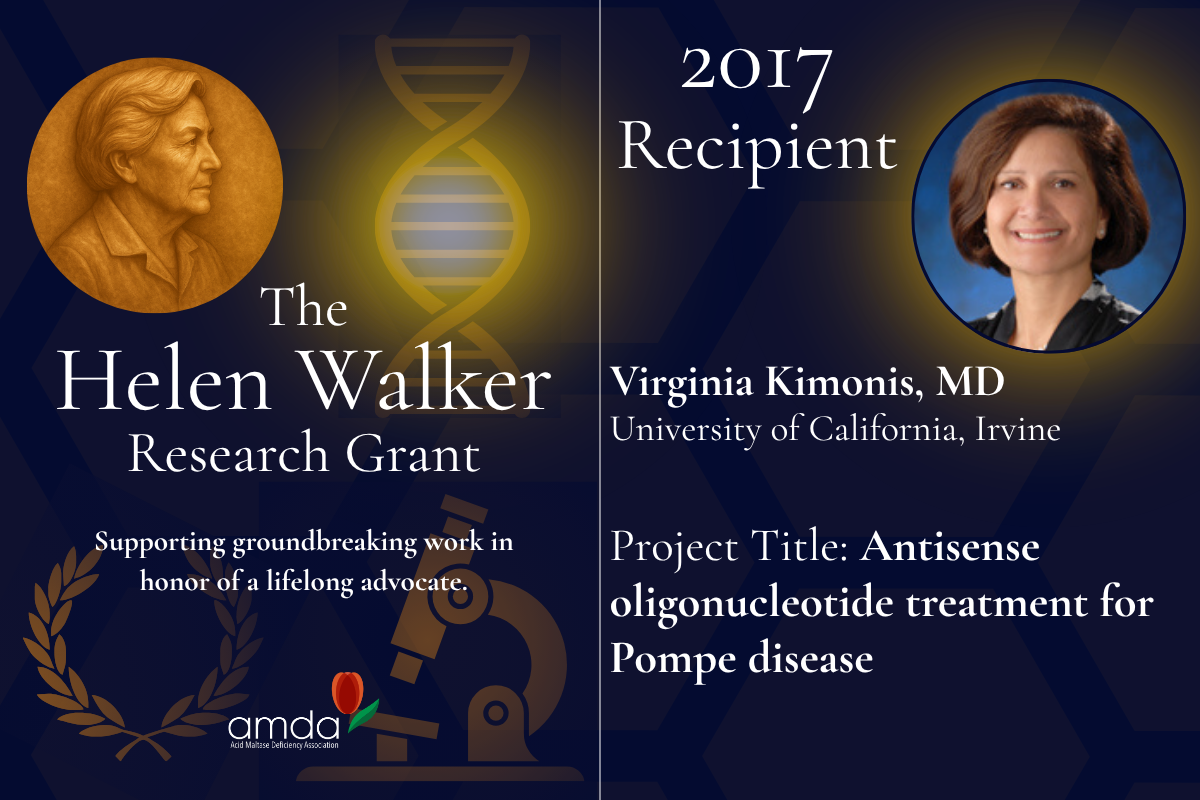
University of California, Irvine| Virginia Kimonis, MDSupporting research aimed at improving substrate reduction therapy approaches for Pompe diseaseA rare genetic disease in which the body cannot properly break down glycogen, leading to buildup that damages muscles and can affect breathing and, in some cases, the heart..
Quick Facts
Year Awarded:
2017
Funding Amount:
$190,000
Lead Investigator:
Virginia Kimonis, MD
Institution:
University of California, Irvine
Research Focus:
Therapeutic development and ERT optimization
Status:
Completed
Project Title
Antisense oligonucleotide treatment for Pompe disease
Project Snapshot
In 2017, the AMDA awarded the Helen Walker Research Grant to Virginia Kimonis, MD, and her research team at the University of California, Irvine, to support a project focused on developing a potential new therapeutic approach for Pompe disease using antisense oligonucleotide (ASO) technology.
The goal of the project was to investigate whether reducing glycogenA stored form of sugar used for energy. production in muscle cells could help improve disease outcomes. By targeting the gene responsible for producing muscle glycogen synthase (GYS1)An enzyme responsible for producing glycogen in muscle cells., the team aimed to reduce glycogen buildup in muscle tissue and explore whether this approach could enhance or complement existing enzymeA protein that helps the body carry out chemical reactions. replacement therapy treatments.
Research Objectives
The project aimed to address several key questions related to treatment outcomes in Pompe disease:
1. Identify the most effective antisense oligonucleotide and dosage to knock down glycogen synthase (GYS1)
Researchers evaluated antisense oligonucleotides targeting the GYS1 gene in Pompe mouse modelsA laboratory mouse used to study disease and test treatments before human trials. to determine which candidate and dosing strategy most effectively reduced glycogen synthase expression and glycogen accumulationThe buildup of glycogen inside cells and tissues when it is not broken down properly. in skeletal muscleMuscles that control movement and are commonly affected in Pompe disease., diaphragmThe main muscle used for breathing., and heart tissue.
2. Study the effects of the optimized antisense oligonucleotide alone and in combination with enzyme replacement therapy (ERT)
The research examined whether treatment with the most effective antisense oligonucleotide could reduce glycogen buildup, improve muscle strength, and enhance treatment outcomes when used alone or alongside enzyme replacement therapy in Pompe mice.
Why This Matters
Pompe disease causes glycogen to accumulate in muscle cells, leading to progressive muscle weaknessA loss of strength that can affect movement, posture, and sometimes breathing. and respiratory complications. While enzyme replacement therapy addresses the underlying enzyme deficiency, it does not always fully prevent glycogen buildup in skeletal muscle.
By studying ways to reduce glycogen production directly, this research explored a complementary strategy that could potentially improve long-term treatment outcomes. Approaches like antisense oligonucleotide therapy may help researchers better understand how to manage glycogen accumulation and support future therapeutic development for people living with Pompe disease.
Research Team
Institution
Department of Pediatrics, Division of Genetics and Genomics Medicine, University of California, Irvine, United States

Lead Investigator
Virginia Kimonis, MD
Professor of Pediatrics and Clinical Geneticist
Co-Investigators
Lan Nguyen Weiss, MD, PhD
Post Doctoral Researcher
Nina Raben, MD, PhD
Collaborating Researcher
Tamar Grossman, PhD
Antisense Drug Discovery Specialist
Alice Chen, MS
Statistician
Lead Investigator
Virginia Kimonis, MD
Professor of Pediatrics and Clinical Geneticist
Co-Investigators
Lan Nguyen Weiss, MD, PhD
Post Doctoral Researcher
Nina Raben, MD, PhD
Collaborating Researcher
Tamar Grossman, PhD
Antisense Drug Discovery Specialist
Alice Chen, MS
Statistician
Grant Support
The AMDA awarded $190,000 through the Helen Walker Research Grant to support this project.
Funding supported laboratory research, animal model studies, data analysis, and collaboration between academic and research partners to investigate antisense oligonucleotide therapies targeting glycogen production in Pompe disease.
Publications Resulting from This Research
This section will be updated as we collect more information about publications resulting from this research.
Related Outputs
This section will be updated as we collect more information about presentations, follow-up studies, or related outputs from this project.
Ongoing Impact
Research supported by the Helen Walker Research Grant helps build knowledge that can shape future studies, clinical care, and treatment strategiesA planned approach to managing disease that may include medicines, monitoring, supportive care, and other therapies. in Pompe disease. As additional publications, presentations, and follow-up work emerge, this page will continue to be updated.
About the Helen Walker Research Grant
The Helen Walker Research Grant honors Helen Walker, a dedicated patient advocateA person who helps patients and families navigate care, information, services, and support. and leader in the Pompe community. Through this grant, the AMDA supports innovative research aimed at improving understanding, treatment, and care for individuals living with Pompe disease.
Explore more Helen Walker Research Grant awardees and the growing body of Pompe research supported by the AMDA.