
2011 Helen Walker Research Grant Award
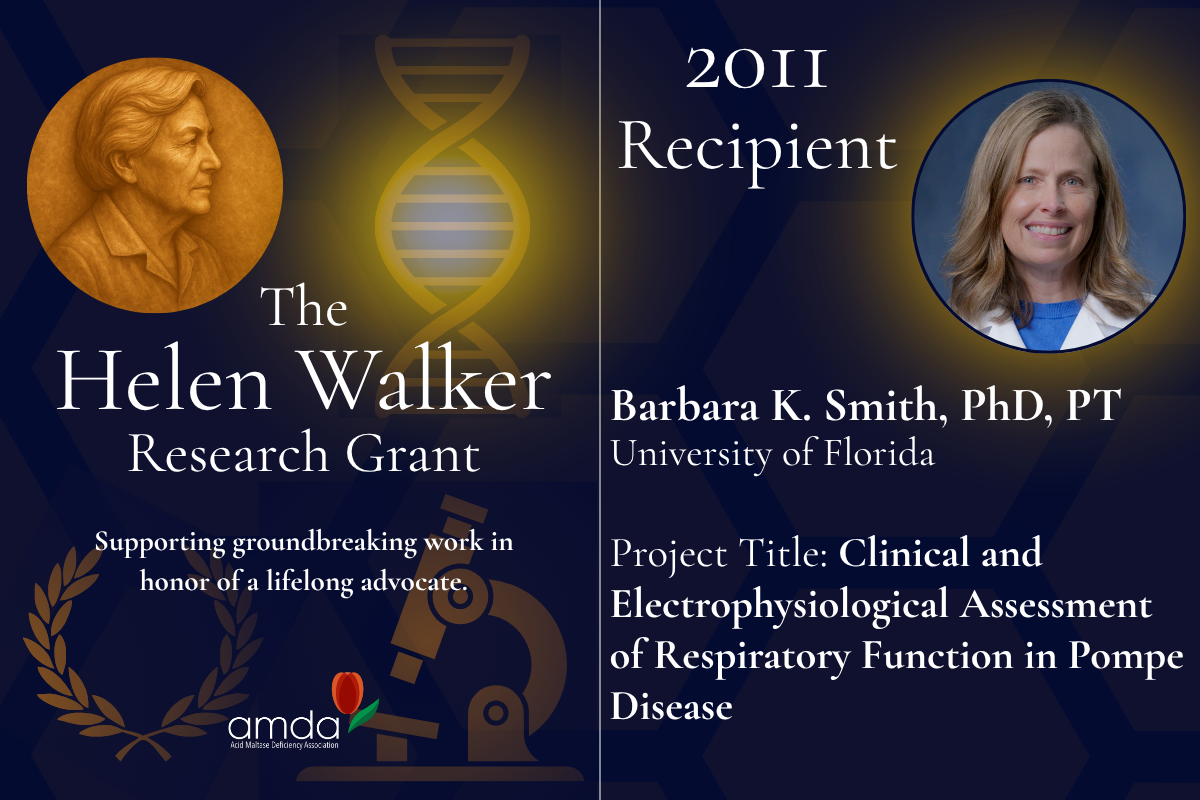
University of Florida | Barbara K. Smith, PhD, PTSupporting research aimed at improving the understanding of respiratory dysfunction in Pompe diseaseA rare genetic disease in which the body cannot properly break down glycogen, leading to buildup that damages muscles and can affect breathing and, in some cases, the heart..
Quick Facts
Year Awarded:
2011
Funding Amount:
$40,000
Lead Investigator:
Barbara K. Smith, PhD, PT
Institution:
University of Florida
Research Focus:
Respiratory care and neuromuscular function
Status:
Completed
Project Title
Clinical and Electrophysiological Assessment of Respiratory Function in Pompe Disease
Project Snapshot
In 2011, the AMDA awarded the Helen Walker Research Grant to Barbara K. Smith, PhD, PT, at the University of Florida, to support a project focused on understanding respiratory muscle dysfunction in Pompe disease. Although enzymeA protein that helps the body carry out chemical reactions. replacement therapy has improved survival and quality of life for many individuals, respiratory weakness and ventilatory insufficiency remain common and serious complications.
This research aimed to investigate whether breathing difficulties in Pompe disease are caused by solely muscle weaknessA loss of strength that can affect movement, posture, and sometimes breathing. or whether nerve-related impairments affecting diaphragmThe main muscle used for breathing. control also contribute to respiratory failure. By combining electrophysiological testing of the phrenic nerve with clinical respiratory assessments, the study sought to better understand the mechanisms responsible for ventilatory dysfunction in adults with Pompe disease.
Research Objectives
The project aimed to address several key questions related to treatment outcomes in Pompe disease:
1. Determine whether impaired neural input contributes to diaphragm weakness
Researchers examined whether dysfunction of the phrenic nerve — the nerve responsible for activating the diaphragm — plays a role in respiratory weakness in adults with Pompe disease. Electrophysiological testing allowed the team to measure nerve conduction and diaphragm activation to determine whether neural impairments contribute to ventilatory insufficiency.
2. Define the relationship between clinical respiratory tests and electrophysiological measurements
The study compared traditional clinical measures of breathing function, such as lung capacity and respiratory pressures, with electrophysiological indicators of diaphragm activity. Researchers sought to determine whether these measurements could together provide a clearer understanding of the causes of progression of respiratory dysfunction in Pompe disease.
3. Improve understanding of diaphragm motor dysfunction in Pompe disease
By integrating neurological and muscular assessments of breathing, the research aimed to identify the relative contributions of neural and muscular pathology in diaphragm weakness. This work was designed to help guide future clinical evaluation methods and inform strategies to improve respiratory care for individuals living with Pompe disease.
Why This Matters
This research matters because respiratory failure remains a major cause of illness and mortality in Pompe disease, even with modern treatments. While muscle weakness is known to affect breathing, emerging evidence suggests that neurological impairments may also contribute to diaphragm dysfunction.
By studying both the neural and muscular components of breathing, the research team aimed to better understand the mechanisms underlying respiratory weakness in Pompe disease. This knowledge could help improve clinical assessment techniques and support the development of more effective treatment strategiesA planned approach to managing disease that may include medicines, monitoring, supportive care, and other therapies. for individuals living with Pompe disease.
Research Team
Institution
University of Florida, United States

Lead Investigator
Barbara K. Smith, PhD, PT
Research Assistant Professor, Department of Physical Therapy
Lead Investigator
Barbara K. Smith, PhD, PT
Research Assistant Professor, Department of Physical Therapy
Grant Support
The AMDA awarded $40,000 through the Helen Walker Research Grant to support this project.
Funding supported specialized electrophysiological testing equipment, participant travel stipends and compensation, research supplies, and personnel assistance needed to conduct respiratory and neurological assessments in study participants.
Publications Resulting from This Research
This section will be updated as we collect more information about publications resulting from this research.
Related Outputs
This section will be updated as we collect more information about presentations, follow-up studies, or related outputs from this project.
Ongoing Impact
Research supported by the Helen Walker Research Grant helps build knowledge that can shape future studies, clinical care, and treatment strategies in Pompe disease. As additional publications, presentations, and follow-up work emerge, this page will continue to be updated.
About the Helen Walker Research Grant
The Helen Walker Research Grant honors Helen Walker, a dedicated patient advocateA person who helps patients and families navigate care, information, services, and support. and leader in the Pompe community. Through this grant, the AMDA supports innovative research aimed at improving understanding, treatment, and care for individuals living with Pompe disease.
Explore more Helen Walker Research Grant awardees and the growing body of Pompe research supported by the AMDA.