
2011 Helen Walker Research Grant Award
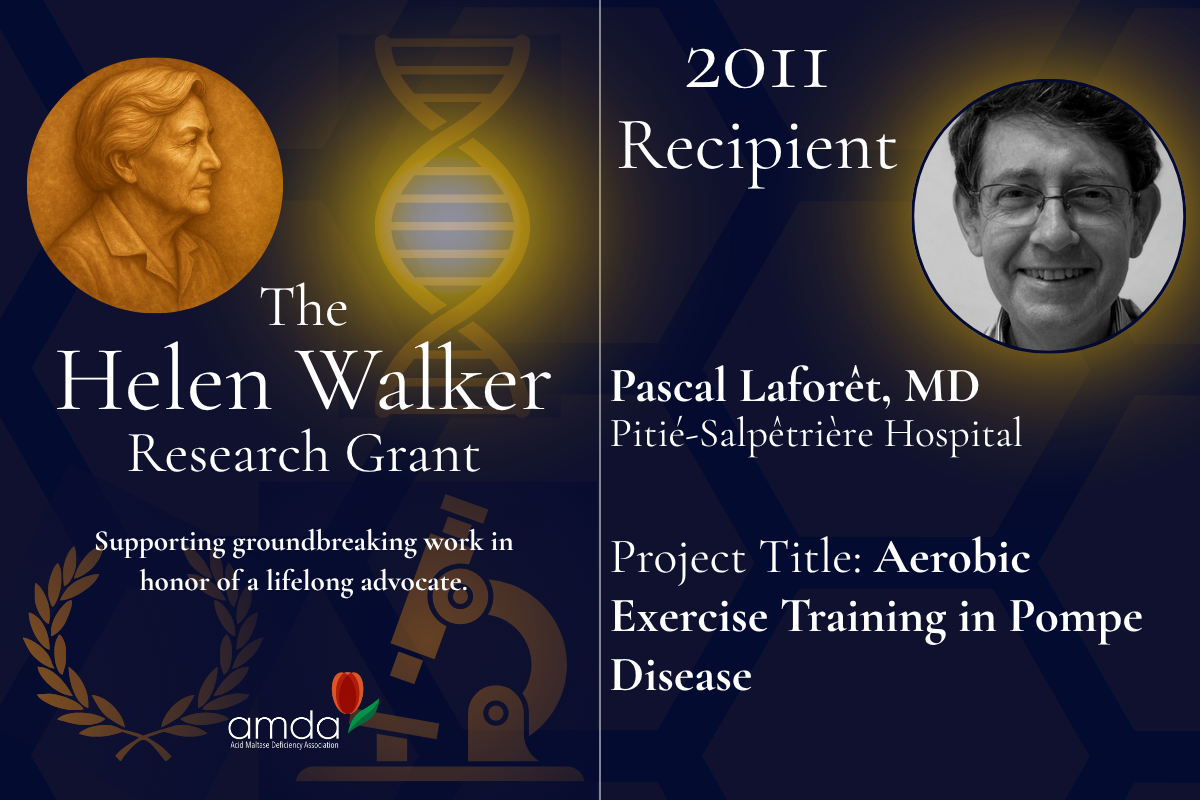
Pitié-Salpêtrière Hospital | Pascal Laforêt, MDSupporting research aimed at evaluating the role of aerobic exercise training in Pompe diseaseA rare genetic disease in which the body cannot properly break down glycogen, leading to buildup that damages muscles and can affect breathing and, in some cases, the heart..
Quick Facts
Year Awarded:
2011
Funding Amount:
$40,000
Lead Investigator:
Pascal Laforêt, MD
Institution:
Neuromuscular Reference Center, Pitiê-Salpêtrière Hospital, Paris, France
Research Focus:
Rehabilitation and quality of life
Status:
Completed
Project Title
Aerobic Exercise Training in Pompe Disease
Project Snapshot
In 2011, the AMDA awarded the Helen Walker Research Grant to Pascal Laforêt, MD, at the Neuromuscular Reference Center at Pitié-Salpêtrière Hospital in Paris, France, to study the effects of aerobic exercise training in individuals with Pompe disease.
Although enzymeA protein that helps the body carry out chemical reactions. replacement therapy has improved disease management, many patients continue to experience muscle weaknessA loss of strength that can affect movement, posture, and sometimes breathing., reduced endurance, and respiratory limitations. This research sought to determine whether a structured aerobic cycling program could safely improve physical function and overall quality of life for adults living with Pompe disease.
The study was designed as a randomized controlled crossover trial involving 30 patients, allowing researchers to compare outcomes between periods of aerobic training and periods without training. Investigators evaluated changes in exercise capacity, walking ability, muscle strength, lung function, and patient-reported measures of fatigueA strong sense of tiredness or low energy that does not fully improve with rest. and daily functioning.
Research Objectives
The project aimed to address several key questions related to treatment outcomes in Pompe disease:
1. Evaluate the benefits of aerobic exercise training in adults with Pompe disease
Researchers proposed studying the effects of a structured three-month aerobic cycling program on maximal oxidative capacity, walking distance, muscle strength, and vital capacity in adults with late-onset Pompe diseaseA form of Pompe disease that begins after infancy and usually progresses more slowly.. The study aimed to determine whether aerobic exercise could improve physical function and quality of life, and potentially complement enzyme replacement therapy.
Why This Matters
This research matters because individuals living with Pompe disease often experience progressive muscle weakness that affects mobility, endurance, and breathing. While enzyme replacement therapy addresses the underlying enzyme deficiency, additional strategies may be needed to support long-term physical function.
By studying the effects of a structured aerobic exercise program, researchers aimed to determine whether exercise could serve as a safe and effective complementary approach to existing therapies. The results of this work could help inform clinical recommendations and provide guidance for physicians and patients seeking ways to maintain strength, endurance, and quality of life.
Research Team
Institution
Neuromuscular Reference Center, Pitié-Salpêtrière Hospital, Paris, France

Lead Investigator
Pascal Laforêt, MD
Co-Investigators
Jean-Yves Hogrel
Marc Zelter, MD
Nicolai Preisler, MD
Karen Madsen, BSc
John Vissing, MD, PhD
Lead Investigator
Pascal Laforêt, MD
Co-Investigators
Jean-Yves Hogrel
Marc Zelter, MD
Nicolai Preisler, MD
Karen Madsen, BSc
John Vissing, MD, PhD
Grant Support
The AMDA awarded $40,000 through the Helen Walker Research Grant to support this project.
Funding supported specialized exercise equipment, patient travel for study visits, research personnel, and monitoring tools used to track exercise intensity and training compliance during the study.
Publications Resulting from This Research
This section will be updated as we collect more information about publications resulting from this research.
Related Outputs
This section will be updated as we collect more information about presentations, follow-up studies, or related outputs from this project.
Ongoing Impact
Research supported by the Helen Walker Research Grant helps build knowledge that can shape future studies, clinical care, and treatment strategiesA planned approach to managing disease that may include medicines, monitoring, supportive care, and other therapies. in Pompe disease. As additional publications, presentations, and follow-up work emerge, this page will continue to be updated.
About the Helen Walker Research Grant
The Helen Walker Research Grant honors Helen Walker, a dedicated patient advocateA person who helps patients and families navigate care, information, services, and support. and leader in the Pompe community. Through this grant, the AMDA supports innovative research aimed at improving understanding, treatment, and care for individuals living with Pompe disease.
Explore more Helen Walker Research Grant awardees and the growing body of Pompe research supported by the AMDA.